
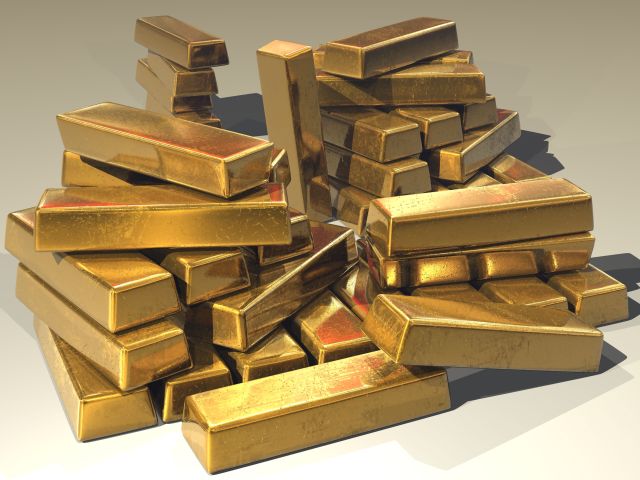
See How Global Uncertainty, Central Banks, and Market Sentiment Impact Gold Prices.
Over the centuries, gold has been a sought-after commodity for its beauty and value. Today, it plays a crucial role in protecting against currency devaluations, inflation, and economic uncertainty. Gold prices often rise when tensions increase, reflecting its widely recognized value.
Understanding the forces that affect spot prices is crucial for making informed financial decisions. In this article, we examine the factors that most influence prices. This knowledge will empower you to make smarter financial decisions.
Gold Prices and Inflation
Gold is directly influenced by inflation. When inflation rises, prices rise as well. Investors use gold to protect their wealth during these times. As demand increases, prices move higher.
For instance, during periods of high inflation, such as the 1970s and early 2020s, the price of gold surged. Investors buy gold to reduce the adverse effects of rising inflation on their investments.
Conversely, when inflation is low or falling, prices will decline. For example, in the 1990s, inflation remained low for many years, and prices fell.
Interest Rates
Interest rates set by central banks around the world will impact prices. Gold does not pay interest or dividends. So when interest rates are higher, investors may choose higher-yielding assets over gold, causing gold to fall.
Conversely, when interest rates are low or negative, gold’s appeal could improve. Because other safe assets offer much lower returns, investors will start buying gold, driving it higher.
The Strength of the U.S. Dollar
Gold is priced in U.S. dollars, which creates an inverse relationship between the two. When the dollar is strong, gold becomes more expensive for other currencies. As a result, demand falls, and prices decline. However, a weaker dollar makes it cheaper in international markets, increasing demand and pushing prices higher.
The relationship between gold and the U.S. dollar is one of the most-watched indicators in commodity markets. By understanding these movements, you can gain clues about the direction.
Geopolitical Uncertainty
Gold’s status as a safe haven during times of war, pandemics, and political unrest is well-established. For instance, during the COVID-19 pandemic, prices surged as global stock markets became volatile. In such cases, investors turn to gold’s stability, which drives prices higher.
Central Bank Gold Reserves
Central banks around the world hold significant quantities of gold. When they buy or sell this precious metal, it directly impacts prices. In recent years, the actions of the central banks of India and China have pushed prices higher. These banks are aggressively increasing their gold reserves.
Psychology
Speculators’ and traders’ behavior causes price fluctuations. Changes in how they view developments in the global economy drive large swings. Fear and greed influence these shifts, increasing the volatility.
The Bottom Line
The price of gold is influenced by many different factors. The most important are inflation, interest rates, the U.S. dollar, geopolitical uncertainty, gold reserves, and psychology. By understanding how these factors work, you can decide whether gold prices are heading higher or lower.