
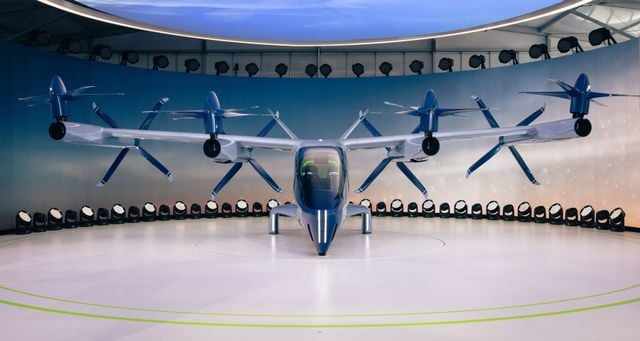
The Race for Urban Air Mobility is Accelerating as the Air Taxi Takes Flight
Air taxis capture the attention of futurists, innovators, and travelers. What once seemed like science fiction is now becoming possible through eVTOL (electric vertical takeoff and landing) technology. These aircraft use distributed electric propulsion systems for takeoff and landing, similar to helicopters.
After takeoff, they switch to forward flight, like an airplane. This technology is key to enabling vertical takeoffs and landings. Over the next several years, the electric air taxi market is forecast to grow significantly through 2030.
What is an Air Taxi?
Air taxis are small aircraft that transport passengers short distances. They can operate with a pilot or autonomously and offer a faster option than ground transportation. Newer models use eVTOL technology, allowing them to take off and land in densely populated areas.
These aircraft are more energy-efficient, quieter, and cost-effective. As many urban areas become increasingly congested, these solutions can help reduce emissions and decrease travel times.
The Growth Projections for the Electric Air Taxi Market
Growth projections indicate annual growth of 34.2% and a market size of $29.19 billion by 2030. Several different factors are fueling this demand.
- Growth in Urban Areas: As cities expand, they need faster transportation solutions. Air taxis are cheaper to operate than traditional taxis and can avoid congestion in these areas.
- Government Support: A key driver of this growth is unwavering support from governments worldwide. With a shared focus on decarbonization and improving mobility, governments are actively seeking out innovative solutions. Aerial taxis are receiving significant backing to address these needs.
- Improvements in Autonomous Systems and Battery Technology: Rapid advances in these technologies are making aerial taxis a cost-effective solution. These vehicles can travel at speeds of up to 200 MPH and have a range of 100 miles. They can carry 4 to 6 passengers, reducing commute times and congestion.
Required Infrastructure for the Flying Car
For air mobility to become a reality, we must establish the necessary infrastructure. These include
- Charging Stations: Fast-charging stations are needed to ensure the aircraft is ready for the next trip.
- Autonomous Traffic Control Management: These systems monitor air traffic patterns to ensure flying cars move safely.
- Vertiport: These are locations for landings and takeoffs, typically situated near transit points.
- Regulations: The EASA and FAA are collaborating to establish standards for pilot training and certification.
Several different cities are making the necessary changes and partnering with manufacturers. The most notable are Singapore, Paris, Los Angeles, and Dubai.
The Risks of Electric Aircraft Taxis
Several risks remain for the development and usage of electric aircraft taxis, including.
- Battery Limitations: The charge times and ranges are limited, and more innovation is needed.
- Safety: The public may be hesitant about using these solutions and wants to see safety standards and noise regulations in place.
- Regulatory Issues: Operating these vehicles requires training and certification, as well as coordination with airspace management. This process could take years to develop, depending on the location and politics.
- Costs: Early electric air mobility rides are expected to cost more initially. However, over time, these costs may decrease as more people use them. The challenge is that these solutions could be available only to the affluent and price out middle-class consumers.
The industry must address these issues to ensure the widespread usage and adoption of this technology.
Aerial Taxi Investment Opportunities
The flying car space is seeing billions of dollars poured into advancing eVTOL technology.
Several publicly traded companies in the space are Joby Aviation (NYSE: JOBY), Archer Aviation (NYSE: ACHR), and Eve Holdings (NYSE: EVEX). Industry titans such as Boeing, United Airlines, BAE Systems, Uber, and Toyota back these companies.

These growing markets suggest early investors could see exponential growth as air mobility solutions become mainstream.
The Bottom Line
The electric air taxi market forecast for 2030 indicates that significant shifts are on the horizon. New electric technology and the need for more innovation are fueling the industry’s growth. In the not-too-distant future, you could see the skies filled with them. Despite many unanswered questions, one thing is certain: the air mobility market’s growth and development are underway.
We recommend doing your research and visiting with a financial advisor before investing. A financial advisor can help you assess the risks and determine if this is the right choice for you.