
From the Florida Groves to the Futures Market, Uncover the Seasonal Forces Driving Orange Juice Futures.
Frozen concentrated orange juice (FCOJ) is often thought of as something you drink with your breakfast. However, for investors and traders, it is a commodity they use to profit from price volatility. Trading on the Intercontinental Exchange (ICE), FCOJ futures let you take advantage of these price swings. Understanding these seasonal patterns is critical to making informed decisions and managing risk.
In this article, we examine these trading patterns and offer insights to help you identify them. Together, these elements will help you evaluate the risks and rewards of OJ futures more effectively.
Understanding the Differences Between FCOJ and Orange Juice Futures
FCOJ is how orange juice trades in global markets. Traders speculate on price movements through orange juice futures contracts. These are agreements to buy or sell this commodity at a specific date and price in the future.
These contracts trade under the symbol FCOJ and are for 15,000 pounds of grade A orange juice solids. The prices are sensitive to numerous factors, including crop yields, weather conditions, and diseases. These variables will drive prices up or down.
Why Seasonality Matters in Orange Juice Trading?
OJ futures follow seasonal patterns that offer insights about where prices are heading. Weather events, harvests, and consumer demand drive these cycles. Orange juice trading is influenced by numerous factors, including.
- Atlantic hurricane season
- Harvest patterns in Florida, Costa Rica, Mexico, and Brazil
- Winter freezes
- Diseases such as citrus greening
Identifying these patterns can give you an early warning of whether prices will rise or fall.
Orange Juice Futures Seasonality Patterns
Every year, different seasonal patterns will impact orange juice prices. Here are the most common trends to watch.
Late Winter to Early Spring: From January to April, OJ futures rise because of fears of cold weather in places like Florida. The threat of freezes can send prices rocketing upward as traders prepare for supply chain issues.
During this time, crops start to grow significantly, and price speculation increases. Many of the biggest increases take place in the 1st quarter of the year. Traders often mark this time on their calendars, as frozen orange juice prices become volatile.
The Summer Months: Between June and November, hurricanes along the Gulf Coast and in Florida can affect FCOJ futures. Major storms can severely damage crops and impact supply chains, causing prices to soar.
For example, in late October 2024, prices increased to $455 after several hurricanes impacted growers in Florida. Traders feared another storm could drive prices upward. These events were short-lived as hurricane season ended with no more storms coming through the Southeast. During this time, you will see short-term price increases tied to the potential threat of hurricanes.
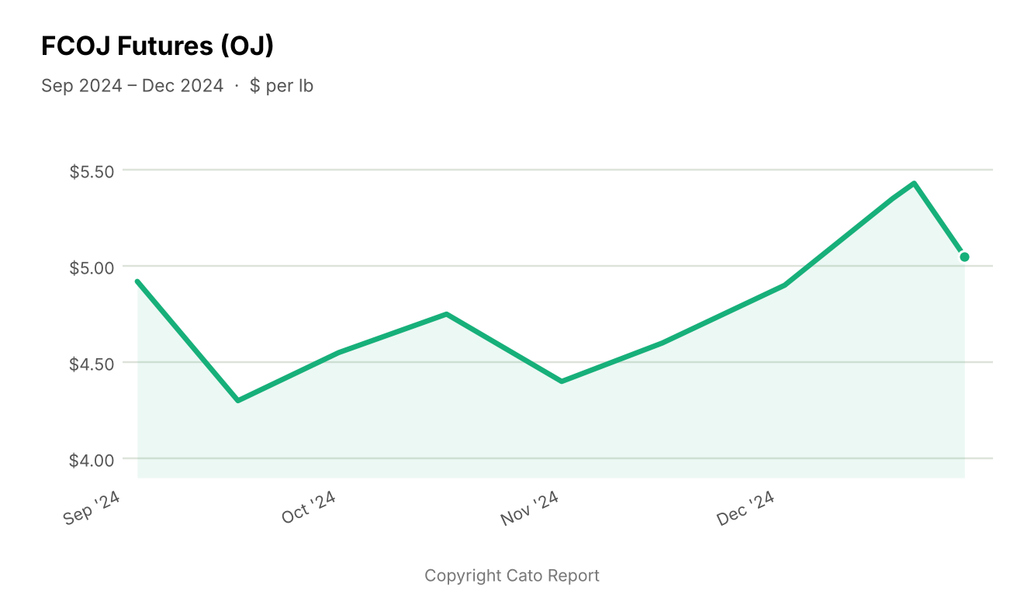
Late Fall and Early Winter: From November to January, prices will decline. This is because harvests begin in Florida, bringing more supply to the market. The only events that could adversely influence prices are major storms or unexpected freezes. In many cases, traders use this time to take profits on frozen orange juice positions. They expect more downward pressure and anticipate prices falling.
Strategies for Trading the Seasonality in Orange Juice Futures
Identifying the seasonal movements is critical for making smarter trading decisions. Here are a few ideas to help you take advantage of these patterns.
Watch the Weather Forecasts in Florida and the Gulf Coast: NOAA provides forecasts on adverse weather events, including hurricanes and frost warnings. These warnings can give you early signs of potential price spikes.
Identify Trends: Using 5- and 10-year charts helps you spot changes in weather patterns that coincide with these seasons.
Manage the Risks: Many traders will buy calls before hurricane season or use puts during the peak harvests. Traders buy calls when they expect prices to rise and puts when they expect prices to fall. These strategies can help you manage risk and prepare for sudden price changes.
Brazil’s Exports: Brazil is the number one exporter of orange juice. Watch for droughts and logistical challenges, which could disrupt supply chains.
The Bottom Line
Understanding FCOJ seasonality patterns can provide valuable insights into price changes. The most critical thing is to use these trends as a general guideline and correlate them with other information. The most notable factors are named hurricanes, crop reports, and global economic conditions. This will help you see how weather events affect prices and profit from these changes.